Bidirectional Impacts of Repeated Respiratory Infections on Mental Well-Beings
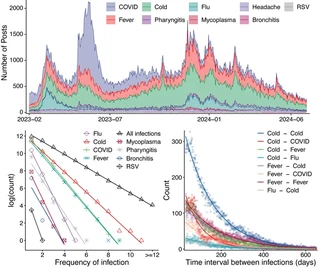
Abstract The negative effect of respiratory infections (Flu, COVID, etc.) on mental disorders has been widely demonstrated, but few studies link those evidences to repeated infections. Will the psychological trauma from reinfection diminish due to the previous infection experience, or will it accumulate? What roles do the number of infections, the time of infections, the time interval between the previous infection, and the transition between different diseases play in the process? This study collected over 1 million respiratory infections self-reported by 300,000 individuals on social media, together with 7 million users with no self-declaration as candidate controls. We tracked people’s expressed sentiment before and after different infection episodes by a quasi-experimental design.

I am a PhD graduate at the WorldPop, University of Southampton. My research focuses on how environmental and policy changes shape human behaviours and population health, bridging geospatial data sciences, computational social science, econometrics, and public health.
My current work focuses on three themes: 1) Spatiotemporal population dynamics, mapping monthly, daily, to hourly population distribution by integrating mobile phone positioning and geospatial data. 2) Human behaviours and disease dynamics, drawing on social media and digital traces data to examine how human mobility and health behaviours shape infectious disease transmission, and how health interventions affect mental well-being. 3) Human mobility and climate change, which investigates the impacts of climate and environmental exposure, including floods, tropical cyclones, and wildfires, on human mobility and population health.